
Alexander Knauf Net Worth is estimated at approximately $1.8 billion in 2026, according to Forbes’ September 2026 real-time estimate. His fortune is primarily associated with the Knauf family business, one of the world’s major producers of building materials and construction systems. Knauf is a privately owned family enterprise rather than a publicly traded corporation, which means the exact value of Alexander Knauf’s personal ownership interests is not publicly disclosed.
Alexander Knauf is a German businessman and member of the family behind Knauf Group. His professional career has been closely connected to the company, but he also developed experience outside the family business. He studied business administration at the University of Passau, earned a Master of Science in Economics from the London School of Economics, worked as a consultant for Roland Berger, and later worked in Chicago for United States Gypsum Corporation.
The story behind Alexander Knauf Net Worth is therefore more complicated than simply describing him as a wealthy heir. His fortune is connected to a multigenerational family enterprise that grew from a German gypsum business established in 1932 into a global building-materials group operating in more than 90 countries.
Knauf’s business interests cover gypsum-based construction materials, insulation, drylining systems, plasters, ceilings, floor systems, thermal insulation solutions, and other construction products. The group currently has more than 43,500 employees and hundreds of production facilities and sales organizations around the world.
Table of Contents
Alexander Knauf Net Worth in 2026

The most widely reported current estimate places Alexander Knauf Net Worth at about $1.8 billion.
Forbes lists Alexander Knauf with a real-time net worth of $1.8 billion as of September 11, 2026. The publication identifies his source of wealth as building materials and lists his residence as Würzburg, Germany. Forbes also gives his age as 52 and his citizenship as German.
This estimate should not be interpreted as Alexander Knauf having $1.8 billion in cash or money sitting in personal bank accounts. His fortune is largely associated with interests connected to a privately held family business, so the value has to be estimated rather than calculated from a publicly traded share price.
For readers searching for Alexander Knauf Net Worth, that distinction is especially important. Public billionaire rankings can provide a useful estimate, but they cannot reveal the exact amount of cash, property, investments, business interests, or other assets an individual owns unless those details are publicly disclosed.
Alexander Knauf Net Worth Quick Facts
| Category | Details |
|---|---|
| Estimated Net Worth | Approximately $1.8 billion |
| Estimated Year | 2026 |
| Primary Source of Wealth | Building materials |
| Nationality | German |
| Residence | Würzburg, Germany |
| Birth Year | 1974 |
| Age in 2026 | 52 |
| Main Business Connection | Knauf Group |
| Industry | Building materials and construction systems |
| Marital Status | Married |
| Children | Four |
| University | University of Passau |
| Master’s Degree | London School of Economics |
The estimated Alexander Knauf Net Worth is therefore best understood as an assessment of the value of his overall financial position rather than a measurement of liquid cash.
His fortune is closely tied to the long-term value of the Knauf business and the family’s ownership structure.
Who Is Alexander Knauf?
Alexander Knauf is a German businessman and member of the Knauf family, a family whose name has become closely associated with the global building-materials industry.
He was born in 1974 and developed his career within the family enterprise after first gaining experience outside the company. His professional history includes banking, economics, management consulting, international business, regional management, and senior group leadership.
That background makes Alexander Knauf different from a purely passive heir.
He did inherit a connection to a highly valuable family enterprise, but he also spent years working within the company and holding management responsibilities.
His professional journey eventually led him to become a General Partner of the Knauf Group and later Speaker of the General Partners.
For anyone researching Alexander Knauf Net Worth, understanding his career is important because the value of his fortune cannot be separated from the company he helped lead.
Early Life and Family Background
Alexander Knauf was born in Germany in 1974 into the Knauf family.
The family’s business history goes back to 1932, when brothers Alfons and Karl Knauf, both mining engineers, obtained rights to gypsum deposits in Schengen, Germany. The original gypsum business eventually developed into what is now the international Knauf Group.
The company’s early history is important because gypsum became an increasingly important construction material as modern building methods developed.
Over the decades, the Knauf family expanded beyond the original gypsum operations. The company added new products, entered additional markets, established production facilities in different countries, and built a much broader construction-materials portfolio.
Alexander Knauf was therefore born into a family where business was already an established part of the family’s identity.
However, publicly available information does not suggest that he simply stepped into a top executive position immediately after finishing school. His career included education and professional experience outside Knauf before he assumed senior responsibilities within the company.
That distinction helps explain the professional side of Alexander Knauf Net Worth.
Readers interested in other German business fortunes can also explore Alexander Gerko Net Worth to learn how another major business family developed its wealth and influence.
The History of the Knauf Business
To understand Alexander Knauf Net Worth, it is necessary to understand the business that created the family’s fortune.
Knauf started with gypsum.
The founders’ original operations were based on access to gypsum deposits, but the business gradually expanded into manufacturing and construction systems. Over generations, Knauf developed products that could be used in walls, ceilings, insulation, interior finishing, and other areas of construction.
The company eventually moved beyond its original German market and established operations around the world.
Today, Knauf describes itself as a global industry leader operating in more than 90 countries, with more than 43,500 employees. The company manufactures products ranging from drywall systems and plasters to insulating materials, ceiling systems, and thermal insulation solutions.
From a Gypsum Company to a Global Manufacturer
Knauf’s transformation took place over many decades.
The company did not become a global building-materials group overnight. Its growth involved expanding production, developing new products, entering new countries, building distribution networks, and investing in manufacturing capacity.
This gradual expansion is significant because it created a business capable of generating substantial value over multiple generations.
Knauf reported approximately €15.6 billion in revenue and about 43,500 employees for 2024 in Alexander Knauf’s official company biography. The same biography states that the group operated more than 320 plants and more than 85 raw-material processing plants worldwide.
Those numbers provide important context for the estimated Alexander Knauf Net Worth.
His fortune is connected to a company with a large international operating base rather than a small regional manufacturer.
Alexander Knauf Education
Alexander Knauf has an academic background in business and economics.
According to his official biography, he studied Business Administration at the University of Passau between 1996 and 1998. He subsequently studied at the London School of Economics, earning a Master of Science in Economics between 1998 and 2000.
His education gave him a foundation in subjects directly relevant to corporate leadership.
Business administration covers areas such as accounting, management, finance, operations, organizational structures, and business strategy. Economics provides a broader understanding of markets, competition, investment, economic cycles, and financial decision-making.
These skills became relevant as Alexander Knauf took on increasingly senior positions within an international company.
His London education also gave him exposure to an international business environment before his later career in global building materials.
Alexander Knauf’s Early Professional Career
Alexander Knauf’s career did not begin entirely inside the family company.
Forbes notes that he began his professional career with an apprenticeship at Deutsche Bank before joining Knauf Gips.
His official Knauf biography also states that after obtaining his master’s degree, he worked as a consultant for Roland Berger GmbH and subsequently moved to Chicago to work for United States Gypsum Corporation.
These experiences are relevant to understanding his professional development.
Banking provided exposure to finance and financial institutions. Consulting offered experience with strategic and organizational issues. Working in the United States gave him international industry experience in a major construction market.
This combination meant that when he eventually took on senior responsibilities within Knauf, he brought experience from several areas rather than only knowledge of the family business.
Career at Knauf Group
Alexander Knauf eventually became increasingly involved in managing the Knauf Group.
According to the company’s biography, he took responsibility for Northern Europe in 2004. He later became responsible for Central Europe from 2012 until January 2013. In January 2013, he was appointed a General Partner of the Knauf Group.
These positions represented a progression from regional management to group-level leadership.
Managing a large international region requires oversight of multiple markets, employees, manufacturing operations, customers, sales organizations, and financial objectives.
His move into the General Partner role therefore marked a significant stage in his career.
The role also placed him closer to the strategic direction and long-term governance of the family business.
If you are interested in how senior executives turn years of management experience into long-term financial success, Alex Bouaziz Net Worth offers another useful comparison of wealth, leadership, and business ownership.
Alexander Knauf as General Partner
Alexander Knauf became a General Partner of Knauf in January 2013.
This position was particularly important because Knauf is a family-owned company where governance and ownership are closely connected.
A General Partner is involved in the strategic leadership of the organization, meaning the position goes beyond simply owning an interest in the business.
Alexander Knauf’s years as a General Partner were part of a period in which Knauf continued developing its international operations.
The company’s scale increased substantially over time, with operations spreading across numerous regions and product categories.
This leadership experience is an important part of the broader story behind Alexander Knauf Net Worth.
Speaker of the General Partners
In January 2022, Alexander Knauf became Speaker of the General Partners.
This made him one of the most senior figures in the company’s leadership structure.
His progression from external professional experience to regional management, General Partner, and then Speaker illustrates the long-term nature of his involvement with the family company.
It also demonstrates why describing him only as an heir would leave out an important part of his professional history.
He spent many years in senior positions and was involved in the management of a large multinational organization.
Alexander Knauf’s 2026 Leadership Transition
A major development in Alexander Knauf’s career occurred in 2026.
Knauf announced that Alexander Knauf would transfer to the Partners’ Committee on January 1, 2026, as part of a broader generational transition.
The company described the change as an effort to combine continuity with renewal.
Several responsibilities previously associated with Alexander Knauf were transferred to other senior executives. These included responsibilities connected to the Gypsum Americas business, global insulation activities, and several corporate functions.
The move is significant because it shows that his role evolved from direct executive management toward a position within the company’s ownership and governance structure.
This is a common challenge for large family-owned companies: maintaining the experience of established family leaders while also developing a new generation of management.
How Alexander Knauf Built His Wealth
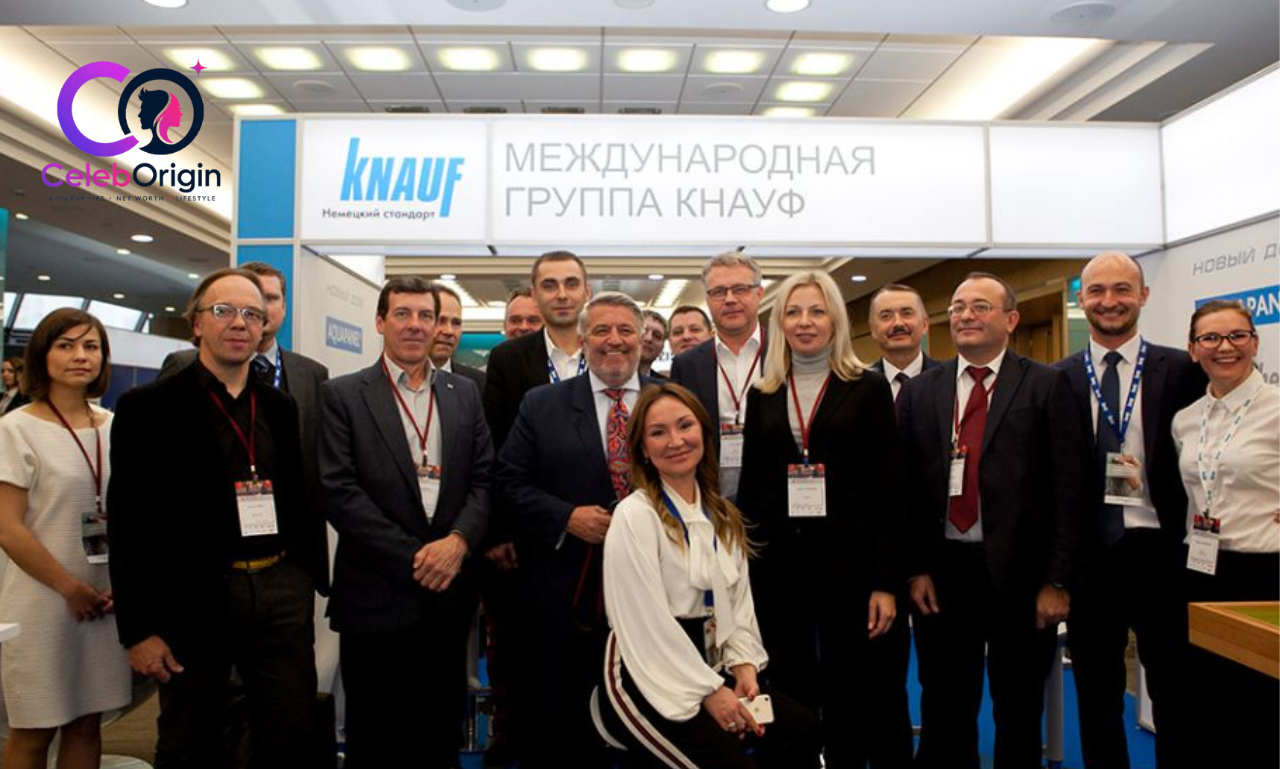
The foundation of Alexander Knauf Net Worth is the Knauf family’s ownership and long-term development of its building-materials business.
However, several factors contributed to the value of that fortune.
Family Ownership
The first factor is family ownership.
The Knauf family has controlled and developed the company for generations. That means the family’s financial position is closely linked to the long-term value of the business.
International Expansion
The second factor is international expansion.
Knauf operates in more than 90 countries and has hundreds of production and sales locations.
This international footprint gives the business access to multiple construction markets.
Product Diversification
The third factor is product diversification.
Knauf does not depend solely on one gypsum product. Its business includes insulation, drywall, plaster, ceiling solutions, floor systems, thermal insulation products, and other construction solutions.
Professional Management
The fourth factor is professional management.
Alexander Knauf spent years managing regions and eventually holding group-level leadership positions.
The combination of ownership, business growth, and professional management helps explain how the family fortune reached billionaire levels.
Knauf Group and Alexander Knauf’s Financial Connection
The central business behind Alexander Knauf Net Worth is the Knauf Group.
Knauf is a privately owned family enterprise headquartered in Iphofen, Germany. The company describes its operations as spanning more than 90 countries, with more than 43,500 employees and more than 320 locations involved in production and sales.
The group serves the construction industry with products and systems used in both new construction and renovation.
Its scale matters because ownership in a global industrial business can create significant wealth even when the individual owner is not personally running a publicly traded corporation.
Because Knauf is private, however, the exact percentage of the company associated with Alexander Knauf is not publicly established in the sources reviewed here.
Therefore, it would be inaccurate to assign him a specific ownership percentage without reliable documentation.
What Does Knauf Group Make?
Knauf’s business portfolio is broad.
The company manufactures and supplies products and systems including:
- Drywall systems
- Gypsum-based products
- Plasters
- Insulation materials
- Thermal insulation systems
- Ceiling solutions
- Cement boards
- Floor systems
- Construction accessories
- Related construction equipment and tools
Knauf says its products cover modern insulation, drylining systems, plasters and accessories, thermal insulation composite systems, paints, floor screed, floor systems, and construction equipment and tools.
This broad product range reduces dependence on one specific part of the construction industry.
It also allows Knauf to participate in different stages of a building project.
Why the Building-Materials Industry Matters
The building-materials sector is a fundamental part of the global economy.
Buildings require walls, ceilings, insulation, flooring systems, and other construction products.
Demand can come from new residential developments, commercial construction, industrial projects, public infrastructure, renovation, remodeling, and energy-efficiency upgrades.
Knauf’s position across several of these categories helps explain why its business has been able to expand internationally.
For Alexander Knauf, this means that his financial position is connected to a company operating in an industry with broad underlying demand.
That does not guarantee future increases in wealth, because construction markets can be cyclical and affected by interest rates, economic conditions, energy prices, raw-material costs, and other factors.
Nevertheless, the scale and diversification of the business provide important context for the estimated Alexander Knauf Net Worth.
Major Sources of Alexander Knauf’s Wealth
The primary source of Alexander Knauf Net Worth is building materials.
Forbes specifically lists building materials as his source of wealth.
His financial profile can therefore be understood through several connected categories.
Business Ownership
The most important component is his connection to the family business.
Business Value
The value of the underlying Knauf enterprise is another major factor.
Potential Distributions
As a member of the family connected to the business, distributions or other financial benefits may contribute to personal wealth, although specific amounts are not publicly disclosed.
Executive Compensation
Senior leadership compensation may also contribute to personal income, but Alexander Knauf’s exact annual compensation has not been publicly established in the sources reviewed.
Because these figures are private, it would be inappropriate to invent a precise annual salary or dividend amount.
Alexander Knauf Income
Alexander Knauf’s exact annual income is not publicly disclosed.
This is an important distinction between income and net worth.
Income refers to money received over a particular period, such as salary, dividends, investment returns, or business distributions.
Net worth refers to the estimated value of assets minus liabilities.
A person can have a very large net worth without receiving an equally large amount of cash income every year.
In Alexander Knauf’s case, much of the estimated fortune is associated with the value of a private family business.
Therefore, it would be misleading to say that he “earns” $1.8 billion per year.
The $1.8 billion figure represents estimated wealth, not annual income.
Alexander Knauf Assets
Public information about Alexander Knauf’s personal assets is limited.
There is no reliable comprehensive public inventory of his private homes, vehicles, aircraft, yachts, securities accounts, or other personal property.
The most important known component of his financial profile is his connection to the Knauf business.
This is typical of many private-company billionaires.
Their wealth may be concentrated in ownership interests that are not publicly visible.
For this reason, estimates of Alexander Knauf Net Worth should not be interpreted as a list of luxury possessions.
A billionaire can have substantial wealth without publicly displaying expensive cars, yachts, or private aircraft.
Alexander Knauf Investments
There is also limited reliable information about Alexander Knauf’s personal investment portfolio outside the Knauf business.
No comprehensive public record establishes a detailed portfolio of stocks, bonds, mutual funds, private-equity investments, cryptocurrencies, or other securities.
As a result, it would be speculative to list individual investments as confirmed holdings.
The most defensible description is that his financial position is primarily associated with the Knauf family business and building-materials industry.
This is important for readers researching Alexander Knauf Net Worth because online billionaire profiles sometimes include assumptions about investments that cannot be independently verified.
Alexander Knauf Real Estate
Forbes lists Alexander Knauf’s residence as Würzburg, Germany.
Würzburg is in Bavaria and is located relatively close to Iphofen, where Knauf is headquartered.
However, reliable public information about his exact home, property values, additional residences, or real-estate portfolio is limited.
Therefore, no specific property value should be added to his estimated fortune without supporting evidence.
His residence is publicly associated with Würzburg, but the value and ownership structure of any particular property remain private.
Alexander Knauf Lifestyle
Alexander Knauf maintains a relatively low public profile compared with many other billionaires.
He is primarily known through his business career rather than celebrity appearances, social-media activity, entertainment, or high-profile luxury displays.
There is limited reliable information about his private spending habits.
Claims about specific cars, yachts, aircraft, luxury residences, or expensive hobbies should therefore be treated carefully unless supported by credible evidence.
This relatively private lifestyle is consistent with the broader public image of the Knauf family.
The family is known primarily for operating an industrial business rather than creating celebrity-style personal brands.
Alexander Knauf Family and Children
According to Knauf’s official biography, Alexander Knauf is married and has four children.
Beyond that information, relatively little verified detail about his immediate family has been publicly disclosed.
His wife’s identity, his children’s professional activities, and their individual financial positions are not sufficiently documented in the sources reviewed for this profile.
That privacy is worth respecting.
It is also relevant to the long-term story of the Knauf business because family-owned companies often face questions about succession and the role of future generations.
However, there is not enough public information to say what role Alexander Knauf’s children may eventually have in the company.
If you are interested in the relationship between family ownership and long-term wealth creation,Alessandro Rosano Net Worth provides another useful perspective on how major fortunes can pass from one generation to the next.
Knauf Museum and the Family’s Cultural Legacy
The Knauf family’s influence is not limited to commercial activities.
Forbes notes the Knauf Museum in Iphofen, located on the premises of a historical inn built in 1688. The museum houses a collection of ancient relief art.
The museum provides an example of the family’s broader cultural legacy.
It also illustrates how established industrial families sometimes become associated with cultural institutions alongside their commercial activities.
However, it is important not to assume that every family cultural activity represents a personal philanthropic initiative by Alexander Knauf.
Public information does not provide enough detail to quantify his individual charitable giving.
Philanthropy and Community Activities
There is limited publicly documented information about Alexander Knauf’s personal philanthropy.
Knauf as a company has participated in community and charitable initiatives. For example, the company has supported employee volunteering and community projects.
However, corporate activity should not automatically be attributed to Alexander Knauf personally.
For that reason, his personal philanthropic profile is best described as not extensively documented in public sources.
The available information does establish the Knauf family’s association with cultural activities such as the museum, but a detailed list of Alexander Knauf’s personal charitable donations cannot be reliably provided.
Knauf’s International Expansion
International expansion has been one of the most important factors in the development of the Knauf business.
The company now has operations across Europe, North America, South America, Asia, Africa, and Australia. Its global presence allows it to serve construction markets with different economic conditions and building requirements.
This international structure also provides opportunities for growth.
At the same time, global operations create additional challenges.
A multinational manufacturer must deal with currency movements, local regulations, supply chains, labor markets, energy costs, raw materials, transportation, and changing construction demand.
The ability to manage these challenges is part of the reason professional leadership has remained important to Knauf.
Innovation, Digitalization, and Sustainability
Knauf’s modern strategy extends beyond traditional gypsum production.
The company says its current leadership is focused on innovation, digitalization, sustainability, and performance.
These areas are increasingly relevant to the construction industry.
Buildings account for significant energy consumption, making insulation and energy-efficient construction products increasingly important.
Digitalization can also improve manufacturing, supply chains, product development, and customer service.
For a business like Knauf, investing in these areas can help protect its competitive position as construction methods evolve.
This long-term investment approach is relevant to Alexander Knauf Net Worth because the value of a private family company depends partly on its ability to remain competitive over decades.
Alexander Knauf’s Role in the Company’s Future

Although Alexander Knauf moved to the Partners’ Committee in 2026, his experience remains relevant to the company.
Knauf described his move as part of a generational transition designed to combine continuity and renewal.
This suggests that the company views his long experience as an asset even as operational responsibilities move to other executives.
The current leadership structure includes executives responsible for areas such as gypsum, insulation, sustainability, innovation, production, digitalization, marketing, and other functions.
The transition therefore represents an evolution rather than an abrupt break with the past.
Why Alexander Knauf’s Net Worth Is an Estimate
One of the most important things readers should understand about Alexander Knauf Net Worth is that the $1.8 billion figure is an estimate.
Knauf is privately owned.
There is no publicly traded Knauf share that provides a constantly updated market value.
Instead, wealth researchers must estimate the value of the company and determine the value attributable to individual family members.
This process can involve assumptions about revenue, earnings, business valuations, ownership structures, comparable companies, debt, and other financial factors.
Consequently, different wealth publications may produce slightly different estimates.
A change in the estimated value does not necessarily mean Alexander Knauf received or lost that exact amount of cash.
Alexander Knauf Net Worth Over Time
Available estimates indicate that Alexander Knauf Net Worth is approximately $1.8 billion in 2026.
Forbes’ September 2026 profile gives the real-time figure at $1.8 billion.
Iconic Billionaires also reported an estimated $1.8 billion figure in its 2026 profile.
The apparent consistency between the estimates provides some confidence about the approximate scale of his fortune, although it does not establish an exact personal balance sheet.
Because the Knauf business is private, future estimates could change as analysts reassess the value of the company.
Factors That Could Change His Net Worth
Several factors can affect future estimates.
Knauf’s Business Performance
Higher sales and profitability could increase the estimated value of the company.
Construction Market Conditions
Construction activity directly affects demand for building materials.
Energy and Raw-Material Costs
Changes in manufacturing and energy costs can affect profitability.
Currency Movements
Knauf operates internationally, so currency movements can influence reported financial results and valuations.
Private-Market Valuation
Changes in the estimated value of privately held businesses can have a significant effect on billionaire rankings.
These factors mean that Alexander Knauf Net Worth should be treated as a moving estimate rather than a permanent figure.
For another detailed look at how private-company ownership can shape a billionaire’s fortune, readers can also explore Alejandro Bailleres Gual Net Worth for additional context on business valuation and inherited wealth.
Alexander Knauf’s Wealth Compared With Other Billionaires
An estimated fortune of $1.8 billion places Alexander Knauf firmly within the global billionaire class.
However, his wealth is considerably smaller than the fortunes of the world’s richest individuals, some of whom have wealth measured in tens or even hundreds of billions of dollars.
The more useful comparison is the structure of his wealth.
Many prominent billionaires built fortunes through publicly traded technology companies, luxury brands, financial institutions, retail businesses, or other highly visible corporations.
Alexander Knauf’s financial position is different because it is connected to a private industrial family business.
That means his wealth is less visible but closely tied to the long-term value of the enterprise.
Family Wealth Versus Self-Made Wealth
Alexander Knauf’s financial story combines family wealth and professional business leadership.
He did not create the original Knauf company.
The business was established by earlier generations of the family in 1932.
However, he developed his own professional career through education, banking-related training, consulting, international employment, regional management, and group-level leadership.
This makes his story different from both a completely self-made entrepreneur and a passive heir who has no operational involvement.
The family business provided the financial foundation, while Alexander Knauf’s career involved direct participation in the company’s management.
What Makes Alexander Knauf’s Financial Profile Unique?
The most distinctive feature of Alexander Knauf Net Worth is its connection to a private industrial enterprise.
His wealth is not based on celebrity status.
It is not primarily associated with movie salaries, sports contracts, music royalties, social-media businesses, or a technology startup exit.
Instead, it is linked to a company that has been operating for more than 90 years.
The Knauf story demonstrates how wealth can be accumulated gradually through industrial expansion, international operations, product diversification, and long-term family ownership.
That model is fundamentally different from fortunes that can rise or fall dramatically because of the public stock market.
The Importance of Generational Succession
The 2026 leadership transition also highlights the importance of succession in family businesses.
When a company remains family-owned across generations, the owners must determine how responsibilities should be transferred.
The transition from Alexander Knauf’s executive role to the Partners’ Committee demonstrates one way of handling that process.
Experienced family members can remain involved in governance while operational responsibilities are assigned to a broader management team.
This can help preserve institutional knowledge while allowing the company to develop new leadership.
For a business as large as Knauf, succession planning is especially important because decisions can affect tens of thousands of employees and operations across many countries.
The Business Legacy Behind Alexander Knauf’s Fortune
The most important part of Alexander Knauf Net Worth is arguably the business legacy behind the number.
The Knauf family began with gypsum deposits and developed the business over multiple generations.
The company then expanded into new construction products, new countries, new technologies, and new areas of the building industry.
Today, Knauf is one of the major global suppliers of building materials and construction systems.
Alexander Knauf represents one stage in that long history.
His career helped connect the family’s traditional ownership model with professional international management.
The 2026 move to the Partners’ Committee marks another stage in that continuing story.
Frequently Asked Questions About Alexander Knauf Net Worth

What is Alexander Knauf Net Worth in 2026?
Alexander Knauf Net Worth is estimated at approximately $1.8 billion in 2026, based on Forbes’ September 2026 real-time estimate.
How did Alexander Knauf become wealthy?
Alexander Knauf became wealthy primarily through his family’s ownership and connection to Knauf, the international building-materials company. His professional career within the company also included senior management positions.
What is Alexander Knauf’s main source of wealth?
His primary source of wealth is building materials. Forbes identifies building materials as the source of his fortune.
Is Alexander Knauf a billionaire?
Yes. With an estimated fortune of approximately $1.8 billion, Alexander Knauf is listed as a billionaire by Forbes.
How old is Alexander Knauf?
Alexander Knauf was born in 1974 and is 52 years old in 2026.
Where does Alexander Knauf live?
Forbes lists his residence as Würzburg, Germany.
Is Alexander Knauf married?
Yes. Knauf’s official biography states that he is married and has four children.
How many children does Alexander Knauf have?
According to his official company biography, Alexander Knauf has four children.
Where did Alexander Knauf study?
He studied Business Administration at the University of Passau from 1996 to 1998 and earned a Master of Science in Economics from the London School of Economics between 1998 and 2000.
Did Alexander Knauf work outside Knauf?
Yes. His professional background includes an apprenticeship at Deutsche Bank, consulting work with Roland Berger, and employment with United States Gypsum Corporation in Chicago.
When did Alexander Knauf become a General Partner?
He became a General Partner of the Knauf Group in January 2013.
When did Alexander Knauf become Speaker of the General Partners?
He became Speaker of the General Partners in January 2022.
What happened to Alexander Knauf in 2026?
As part of a generational transition, Alexander Knauf moved to the Partners’ Committee on January 1, 2026.
What does Knauf Group manufacture?
Knauf manufactures and supplies construction products and systems including gypsum-based products, drywall systems, insulation materials, plasters, ceilings, floor systems, and other building solutions.
How large is Knauf Group?
Knauf operates in more than 90 countries and has more than 43,500 employees. Its official biography reports more than 320 plants and more than 85 raw-material processing plants, with €15.6 billion in 2024 revenue.
Is Knauf Group publicly traded?
Knauf is a family-owned private company, rather than a conventional publicly traded corporation.
Does Alexander Knauf have publicly known investments?
His personal investment portfolio is not comprehensively disclosed. His most clearly documented source of wealth is his connection to the Knauf business.
What are Alexander Knauf’s main assets?
The precise composition of his personal assets is not publicly disclosed. His financial profile is primarily associated with his interest in the Knauf family business.
What is Alexander Knauf’s annual income?
His exact annual income is not publicly disclosed. It would be speculative to assign a specific salary, dividend, or investment-income figure without reliable documentation.
Why is Alexander Knauf Net Worth only an estimate?
Because Knauf is privately held, there is no public stock-market valuation that can be used to calculate his wealth precisely. Billionaire rankings therefore estimate the value of his business interests and other known assets.
Is Alexander Knauf self-made?
His fortune is strongly connected to family wealth and ownership of the Knauf business. However, he also built a substantial professional career within the company and gained experience through banking, consulting, international employment, and senior management.
Does Alexander Knauf own Knauf by himself?
There is no reliable public evidence establishing that Alexander Knauf personally owns the entire company. Knauf is a family-owned enterprise with multiple family members associated with its ownership structure.
What is the Knauf family’s history?
The Knauf business dates back to 1932, when Alfons and Karl Knauf obtained rights to gypsum deposits in Schengen, Germany. The company subsequently expanded into a global building-materials group.
What is Alexander Knauf best known for?
Alexander Knauf is best known for his leadership role within the Knauf Group and his connection to the family that owns the international building-materials business.
Final Thoughts on Alexander Knauf Net Worth
Alexander Knauf Net Worth is estimated at approximately $1.8 billion in 2026, placing him among Germany’s billionaire business figures.
But the figure itself tells only a small part of the story.
The more important story is the Knauf family business behind his fortune.
Founded in 1932 from a gypsum operation established by brothers Alfons and Karl Knauf, the company grew over several generations into a global building-materials group. Today, Knauf operates across more than 90 countries, employs more than 43,500 people, and operates hundreds of production and sales locations.
Alexander Knauf’s own career followed a professional path that included business and economics education, banking experience, management consulting, international industry work in Chicago, regional leadership, and senior management of the family company.
He became responsible for Northern Europe in 2004, later managed Central Europe, became a General Partner in 2013, and became Speaker of the General Partners in 2022.
In 2026, his role changed again when he transferred to the Partners’ Committee as part of a broader generational transition. The company described the move as a way to combine continuity with renewal while bringing new executives into senior operational positions.
Alejandro Bailleres Gual Net Worth can provide another detailed look at the career, wealth, business interests, and financial profile of a prominent business figure for readers who want to continue exploring how major fortunes are built and maintained.

Mason Khan is the founder and writer behind CelebOrigin, a website dedicated to celebrity net worth, biographies, careers, lifestyles, and financial profiles. Through CelebOrigin, Mason researches publicly available information about celebrities, billionaires, and other notable personalities to create informative and easy-to-understand profiles.
His goal is to make information about well-known personalities more accessible by bringing together details about their careers, achievements, net worth, lifestyle, and professional journeys in one place.
Mason focuses on presenting information in a clear and reader-friendly way while using publicly available sources and regularly updating articles when new information becomes available.
— Mason KhanFounder & Writer, CelebOrigin