
Alexandr Wang has become one of the most prominent young entrepreneurs in the artificial intelligence industry. As the co-founder of Scale AI and Meta’s chief AI officer, he has built a career around the technology, data infrastructure, and research systems that help power modern artificial intelligence. His rise from a mathematically gifted student in New Mexico to a billionaire technology entrepreneur illustrates how quickly the AI industry can create extraordinary wealth.
As of October 2026, Alexandr Wang’s estimated net worth is $3.2 billion. This estimate reflects the value of his business interests and other financial holdings rather than a publicly confirmed bank balance. His fortune is closely associated with Scale AI, the company he co-founded in 2016, and the major investment Meta made in the business in 2025.
Understanding Alexandr Wang net worth requires more than looking at a single billionaire ranking. His financial story involves startup ownership, venture capital, artificial intelligence infrastructure, private-company valuations, and his move into Meta’s leadership team. The following profile explores his early life, education, entrepreneurial journey, wealth sources, career achievements, personal background, and the factors that could influence his financial future.
Table of Contents
Alexandr Wang Net Worth in 2026
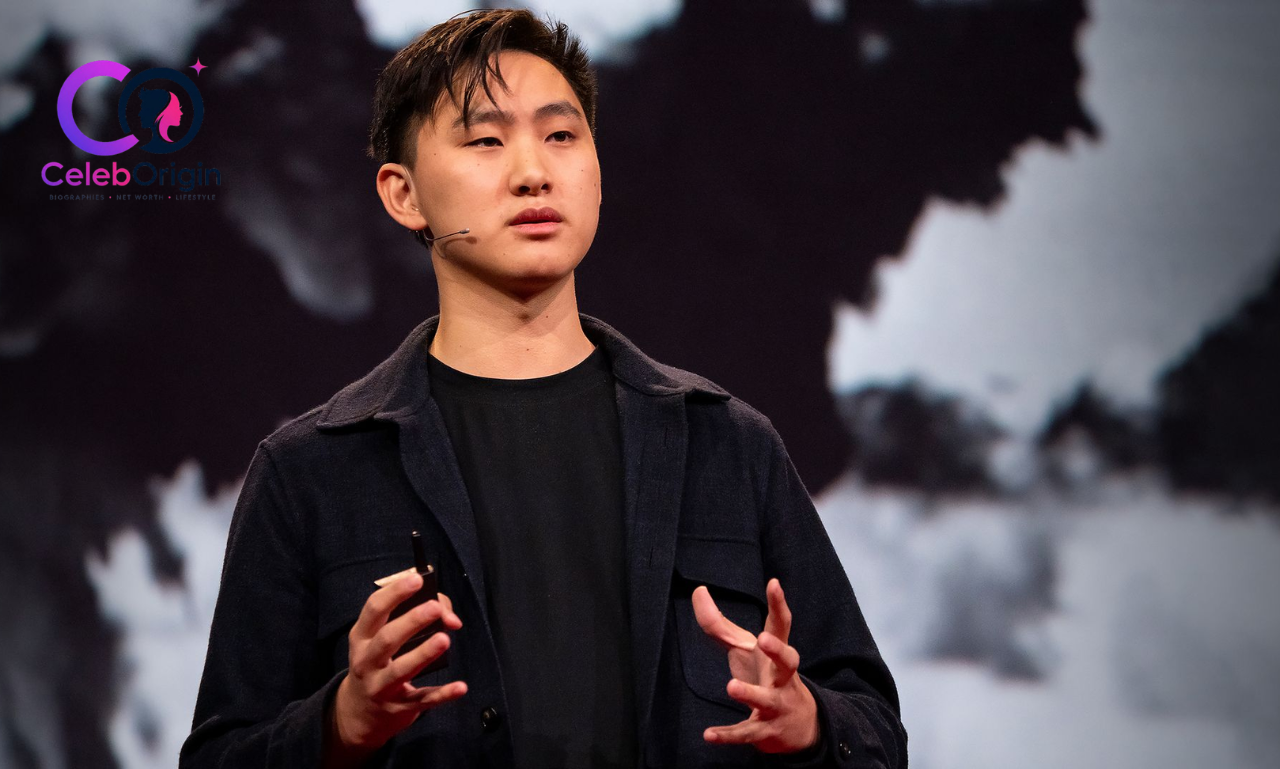
Alexandr Wang’s estimated net worth in 2026 is $3.2 billion, based on the latest reported real-time estimate available for October 19, 2026. Other celebrity wealth publications also estimate his fortune at approximately $3.2 billion. Although these estimates are consistent, they should be understood as estimates rather than audited statements of his personal finances.
Wang accumulated most of his wealth through entrepreneurship rather than a traditional executive career. His early ownership stake in Scale AI became extremely valuable as demand for artificial intelligence systems increased and major technology companies sought better ways to prepare and evaluate the data used to train their models.
His financial position changed significantly when Meta announced a multibillion-dollar investment in Scale AI in 2025. The deal valued Scale AI at approximately $29 billion and gave Meta a 49% stake, while Wang left his chief executive position at Scale AI to lead Meta’s artificial intelligence efforts. The transaction helped establish the scale of the company’s business value, although it did not mean that Wang personally received the entire investment amount.
Alexandr Wang Net Worth at a Glance
| Category | Details |
| Full name | Alexandr Wang |
| Birth | January 1997 |
| Age | 29 in October 2026 |
| Birthplace | Los Alamos, New Mexico, United States |
| Nationality | American |
| Profession | Technology entrepreneur and AI executive |
| Estimated net worth | $3.2 billion |
| Primary source of wealth | Scale AI ownership and technology entrepreneurship |
| Company co-founded | Scale AI |
| Current major leadership role | Chief AI Officer at Meta |
| Education | Massachusetts Institute of Technology; did not graduate |
| Known for | AI data infrastructure and Scale AI |
| Marital status | Reported as single |
Financial estimates and personal details can change. Net worth figures are estimates, and private-company ownership values are not equivalent to immediately available cash.
Why Alexandr Wang’s Wealth Is Difficult to Calculate Precisely
Alexandr Wang net worth is difficult to establish with absolute precision because much of his fortune is connected to private-company equity. Unlike publicly traded shares, private shares do not have a continuously observable market price, and selling them may be subject to contractual restrictions, investor approvals, and other conditions.
A billionaire’s reported wealth can include the estimated value of company shares, investments, and other assets after accounting for relevant liabilities. That figure does not necessarily reveal the person’s cash balance, annual income, tax obligations, or the amount that could be realized if every asset were sold.
Scale AI’s valuation is therefore an important part of understanding Wang’s fortune, but it should not be confused with his personal net worth. The company’s enterprise or equity value belongs to the business and its shareholders collectively. Wang’s own financial position depends on the value of the shares and other assets he actually owns.
This distinction matters when comparing Alexandr Wang net worth across different publications. Estimates may differ because they use different assumptions about ownership, share prices, transaction terms, and other financial information that is not publicly available.
Early Life and Family Background
Alexandr Wang was born in January 1997 in Los Alamos, New Mexico, a town known for its scientific research and its connection to the Los Alamos National Laboratory. He grew up in an environment where science, mathematics, and technical problem-solving were familiar subjects.
His parents were physicists who worked at the national laboratory. Their scientific backgrounds meant that Wang was exposed to a world in which research, analytical thinking, and complex technical challenges were part of everyday life. Although his parents’ careers did not determine his future, this environment provided a natural setting for his interest in mathematics and computing.
Wang’s early development is an important part of the story behind Alexandr Wang net worth. His fortune was not inherited from a family business or created through a career in entertainment. It developed from his work in technology, his decision to build a startup, and his ownership in a company that became valuable as artificial intelligence expanded.
Growing Up in Los Alamos
Los Alamos is a relatively small community in northern New Mexico, but it has an unusually strong connection to scientific research. The national laboratory has played an important role in American nuclear research and national security, and the surrounding community has long attracted scientists, engineers, and technical professionals.
For Wang, growing up in this setting meant that advanced science and mathematics were not distant or abstract ideas. They were part of the broader culture of the town. He became interested in subjects that rewarded logical reasoning, precision, and the ability to solve difficult problems.
His upbringing also exposed him to the relationship between technical knowledge and practical applications. Scientific research can have consequences far beyond a classroom or laboratory, a principle that would later become relevant to his work in artificial intelligence infrastructure.
Wang’s childhood did not make his eventual financial success inevitable. Many students grow up around science without founding multibillion-dollar companies. His achievement came from combining his technical interests with an ability to identify a commercial problem, recruit people, build a company, and attract investment.
Interest in Mathematics and Programming
Wang distinguished himself as a student through his performance in mathematics, computing, and physics competitions. He participated in demanding academic programs and earned recognition in competitions associated with these subjects.
His achievements included participation in the United States of America Mathematical Olympiad pathway, the United States Physics Team program, and the United States Computing Olympiad. Such competitions require more than memorizing classroom material. They reward structured reasoning, algorithmic thinking, and the ability to solve unfamiliar problems under pressure.
These skills are relevant to computer science and artificial intelligence, where engineers must often break complex problems into smaller parts and develop efficient solutions.
Wang’s early technical ability helped him obtain professional opportunities while he was still a teenager. Instead of following a conventional path of completing university, finding an entry-level job, and gradually moving into management, he began working in technology before reaching adulthood.
That early experience later became a foundation for his entrepreneurial career and, ultimately, for Alexandr Wang net worth.
Education and Academic Achievements
Alexandr Wang attended Los Alamos High School before enrolling at the Massachusetts Institute of Technology, widely known as MIT. He studied mathematics and computer science-related subjects, with an interest in machine learning and technical applications.
MIT offered an environment in which ambitious students could explore advanced engineering, mathematics, computing, and entrepreneurship. Wang’s academic background was relevant to the type of company he would eventually create because Scale AI required an understanding of software systems, data, and the technical requirements of machine learning.
However, Wang did not complete a degree at MIT. He left college to pursue a startup opportunity through Y Combinator, the influential startup accelerator that supported the early development of Scale AI.
Why Alexandr Wang Left MIT
Leaving a prestigious university is a major decision, especially for a student pursuing a technical discipline. Wang’s decision reflected the opportunity he saw in building a business rather than continuing along a traditional academic path.
In 2016, he joined the Y Combinator startup accelerator and co-founded Scale AI with Lucy Guo. The experience gave the founders access to mentorship, investors, other entrepreneurs, and a structured environment for testing a business idea.
The decision involved risk. A startup can fail, and leaving university does not guarantee future employment or financial success. Wang instead committed himself to developing a company that could solve a problem faced by businesses building machine learning systems.
Scale AI eventually became a significant company in the artificial intelligence ecosystem. Its growth demonstrates why the decision became an important turning point in the story of Alexandr Wang net worth.
It is important, however, not to treat dropping out of college as a universal formula for success. Wang had already demonstrated strong technical ability, gained work experience, and entered a startup accelerator. His circumstances were specific to his skills, timing, business idea, and the opportunities available to him.
The Role of Practical Experience
Formal education provides foundational knowledge, but running a technology company requires additional capabilities. Entrepreneurs must understand customers, recruit employees, manage budgets, negotiate contracts, raise capital, and decide which products deserve investment.
Wang gained experience in these areas through the development of Scale AI. The business required him to translate a technical problem into a product that companies would pay to use.
That transition from technical work to company leadership was especially important. A programmer can build a useful product, but creating a large business requires the ability to deliver the product consistently, build trust with clients, and expand operations.
The combination of technical understanding and business execution became one of the central factors behind Wang’s career.
Alexandr Wang’s Career Before Scale AI
Before becoming widely known as the founder of Scale AI, Wang gained experience working in technology companies. His early professional history included Addepar, a financial technology company, and Quora, a question-and-answer platform.
These experiences exposed him to software development in real commercial environments. Working with established technology teams can teach young engineers how products are developed, how systems are maintained, and how software must serve the needs of actual users.
Wang’s early jobs also demonstrated that he was prepared to enter the technology industry before completing his university education. He was not relying solely on academic credentials; he was building practical experience that could be applied to a company of his own.
Working at Addepar
Addepar develops technology for investment professionals and wealth managers. Its work involves systems for organizing and analyzing financial information, helping clients understand complex portfolios and financial positions.
For a young engineer, a role at a financial technology company can provide exposure to software systems that handle large amounts of structured information. Such experience helps illustrate how data quality, organization, and reliable processing influence the usefulness of a product.
Although Addepar was not the direct source of Wang’s billionaire fortune, it formed part of his early professional background.
Experience at Quora
Wang also worked at Quora, where he encountered another type of data-intensive technology business. Platforms that organize questions and answers depend on systems capable of processing information and helping users find relevant content.
Wang met Lucy Guo through his early technology-industry connections, and the two later became co-founders of Scale AI. Their partnership brought together complementary experience in technology and product development.
The transition from working as an engineer to founding a company marked a major change in Wang’s professional responsibilities. Rather than concentrating primarily on software, he would need to build a business around a problem that other organizations considered important enough to pay to solve.
Founding Scale AI in 2016
Scale AI was founded in 2016 by Alexandr Wang and Lucy Guo. The company’s initial opportunity came from a challenge that was becoming increasingly important as machine learning advanced: AI systems needed large amounts of useful, accurately labeled data.
A machine learning model learns patterns from examples. Depending on the application, those examples may consist of photographs, videos, text, audio, or other forms of information. For supervised learning, the data may need labels that identify objects, describe actions, categorize content, or indicate the correct answer.
Preparing this data can be time-consuming and expensive. Poorly labeled examples can reduce the quality of a model’s results, while inconsistent datasets can make training and evaluation more difficult.
Scale AI developed services and software to help organizations prepare, annotate, manage, and evaluate data for artificial intelligence applications.
The Business Problem Scale AI Addressed
Imagine a company developing a system that allows a vehicle to recognize pedestrians, traffic signals, bicycles, and road markings. The system needs examples of those objects under different lighting conditions, weather conditions, camera angles, and road environments.
Raw photographs alone are not enough for every training method. A company may need people or specialized tools to identify objects, draw boundaries around them, classify events, and check whether the labels are accurate.
A similar challenge exists in language models. Organizations may need carefully prepared examples, expert evaluations, comparisons between model responses, and assessments of whether an answer is accurate or follows instructions.
Scale AI helped organizations handle this work at a scale that would be difficult to manage through improvised internal processes alone.
This was a commercially significant opportunity because AI developers were investing heavily in systems that depended on large, reliable datasets.
The Importance of the Founding Team
Building Scale AI required more than recognizing a problem. Wang and Guo needed to create a product, attract customers, recruit workers and specialists, and convince investors that the business could grow.
The company joined Y Combinator’s 2016 summer program, giving the founders an opportunity to develop their idea and build relationships within the startup ecosystem.
As the company gained traction, it attracted venture capital and expanded its services. The growing demand for machine learning infrastructure helped it move beyond a small startup and establish itself as a provider to organizations developing advanced AI systems.
Wang’s role as co-founder and chief executive gave him an ownership interest in the business, subject to the company’s financing arrangements and the distribution of equity among shareholders. That ownership became the principal foundation of Alexandr Wang net worth.
Lucy Guo’s Contribution
Lucy Guo was Scale AI’s co-founder and an important part of the company’s early history. Her experience in product development and technology helped establish the business alongside Wang.
Guo left the company in 2018, while Wang continued leading Scale AI through its subsequent growth. Although Wang became the public face of the company, Scale AI’s development involved employees, investors, customers, and other contributors.
Recognizing the co-founder’s role provides a more accurate account of the company’s origins. Major technology businesses rarely become successful through one person’s work alone.
How Scale AI Became a Major AI Company
Scale AI’s growth was closely connected to the expansion of machine learning across the technology industry. As companies moved from experimental AI projects toward larger deployments, they needed dependable ways to collect, label, manage, and evaluate data.
Scale AI developed a position in this market by offering data infrastructure and services that supported multiple types of AI applications.
Data Labeling and Annotation
Data annotation involves adding useful information to raw data. For images, this may include identifying objects or outlining their boundaries. For text, it can involve categorization, evaluation, or labeling examples for training and testing.
The task varies according to the application. A self-driving vehicle system has different requirements from a customer-service chatbot, a medical imaging model, or a system that summarizes documents.
Scale AI’s business focused on helping customers create datasets appropriate for their particular technical needs.
Supporting Generative AI
The growth of generative AI expanded the importance of data preparation and model evaluation. Language models and other generative systems need more than large quantities of raw information. Developers also need ways to evaluate output quality, assess reasoning, identify mistakes, and improve how systems respond to users.
Specialized human feedback can help developers compare model responses, evaluate factual accuracy, and assess whether a model follows instructions. Expert reviewers may be required for complicated technical or professional questions.
Scale AI expanded its relevance as the AI industry increasingly focused on the quality and evaluation of models, not simply the amount of data available.
Government and Enterprise Customers
Scale AI has served technology companies and government-related customers. Its work has included applications where data quality, operational reliability, and specialized evaluation are important.
Enterprise and government contracts can provide substantial business opportunities, but they also bring obligations involving security, quality control, compliance, and delivery requirements.
The company’s position across different customer groups helped demonstrate that AI infrastructure was becoming a commercial market in its own right.
For Wang, this growth mattered because the value of a founder’s equity is influenced by the company’s ability to win customers, expand revenue, and attract investors. Scale AI’s development was therefore central to Alexandr Wang net worth.
Meta’s $14.3 Billion Investment in Scale AI
One of the most important developments in Alexandr Wang’s career occurred in June 2025, when Meta announced a major investment in Scale AI. The transaction valued Scale AI at approximately $29 billion, with Meta acquiring a 49% stake for a reported $14.3 billion. Wang subsequently left his CEO position at Scale AI to lead Meta’s AI efforts.
The deal attracted widespread attention because it connected one of the world’s largest technology companies with a rapidly growing AI infrastructure business. It also demonstrated how much established companies were willing to invest in the people, technology, and resources needed to compete in advanced artificial intelligence.
Why Meta Invested in Scale AI
Meta operates major digital platforms and has invested heavily in artificial intelligence. Its products and services can benefit from AI systems that improve recommendations, automate tasks, understand language, generate content, and support new user experiences.
Developing more advanced AI models requires substantial computing resources, specialized researchers, carefully prepared data, and rigorous evaluation. Scale AI’s work in data infrastructure and model evaluation made it strategically relevant to the broader AI industry.
Meta’s investment gave it a significant financial interest in Scale AI while strengthening its connection to Wang. The transaction was part of Meta’s effort to increase its AI capabilities and compete with other leading AI developers.
The deal also illustrated a broader trend: AI companies increasingly depend on specialized suppliers, infrastructure providers, research teams, and partnerships rather than developing every capability independently.
What the $14.3 Billion Deal Means for Alexandr Wang Net Worth
It is important to distinguish the investment amount from Wang’s personal earnings.
Meta’s reported $14.3 billion investment was associated with obtaining a 49% interest in Scale AI. It was not a $14.3 billion payment to Wang personally. The money and ownership arrangements related to the transaction should not be treated as though the entire amount went into the founder’s bank account.
Wang’s wealth depends on the value of the assets he owns, including any remaining company interests and other investments. The exact distribution of transaction proceeds, his current ownership percentages, and his private financial arrangements are not fully disclosed in the public information used for this profile.
Nevertheless, the transaction helped establish a significant valuation benchmark for Scale AI. A business valued at approximately $29 billion can make even a minority ownership interest financially substantial.
This is why the Meta deal is central to understanding Alexandr Wang net worth in 2026. It provided an important reference point for assessing the value of his entrepreneurial work, even though the exact amount of wealth he realized from the transaction remains a separate question.
Scale AI’s Valuation Versus Its Founder’s Wealth
A company’s valuation represents an assessment of the value of its equity or business under particular conditions. A founder’s net worth, by contrast, is an estimate of the value of the founder’s personal assets minus liabilities.
These figures can be related without being identical.
For example, if an entrepreneur owns shares in a private company valued at billions of dollars, the shares may account for a substantial portion of the entrepreneur’s reported wealth. However, the entrepreneur does not own the entire company simply because they founded it.
Venture capital funding can dilute the ownership of earlier shareholders. Employee stock plans, co-founder interests, investor agreements, taxes, and other arrangements may further affect the amount attributable to an individual.
The terms of a private transaction can also contain different rights for different classes of shares. A headline valuation does not necessarily mean that every shareholder could sell their shares at precisely the same price.
These distinctions explain why Alexandr Wang net worth should be discussed as an estimate rather than a direct calculation based on Scale AI’s headline valuation.
Alexandr Wang’s Role at Meta
Following the 2025 transaction, Wang moved from leading a startup to working within one of the world’s largest technology companies. Meta appointed him its chief AI officer, placing him in a senior role in its effort to develop more advanced AI systems.
His responsibilities involve a different set of challenges from those he faced as the CEO of Scale AI. At a startup, a founder may focus on finding customers, refining products, securing funding, and building a sustainable business. At a large technology company, AI leadership involves coordinating researchers, engineers, infrastructure teams, product groups, and substantial long-term investments.
Leading Meta’s Artificial Intelligence Efforts
Meta has invested in AI research and applications across its platforms. Its efforts include developing models, improving its computing infrastructure, integrating AI into consumer products, and exploring more advanced systems.
Wang’s appointment reflects the importance of attracting experienced technology entrepreneurs and researchers as the AI industry becomes more competitive.
His experience building Scale AI gave him exposure to the data and evaluation challenges that AI developers face. That background is relevant to an organization seeking to develop capable models and establish reliable methods for measuring their performance.
However, leading an AI organization at Meta is not the same as running Scale AI. Meta has a much larger existing workforce, a broad range of products, and a different set of corporate priorities. Its AI strategy must work within those organizational and financial constraints.
Meta Superintelligence Labs
Wang has been associated with Meta Superintelligence Labs, the research organization established as part of Meta’s effort to advance its AI capabilities.
The initiative reflects the company’s ambition to develop highly capable AI systems and attract leading researchers. Building such systems requires large investments in computing, research, talent, and data.
Progress in AI research can be difficult to predict. Technical breakthroughs, training costs, model performance, product adoption, and competition can all affect the outcome of a research program.
Wang’s leadership role has placed him near the center of these developments. His professional reputation and future financial prospects may be influenced by the organization’s performance, although the direct relationship between his employment compensation and his personal wealth is not publicly established in detail.
Why His Meta Position Matters Financially
A senior role at Meta can provide substantial professional opportunities and potentially significant compensation. However, a reliable public breakdown of Wang’s current salary, bonuses, equity awards, and other benefits is not available in the sources used here.
It would therefore be misleading to assign him a specific annual salary without a reliable disclosure.
The larger financial story remains his entrepreneurial ownership and the value associated with Scale AI. Executive compensation may contribute to his financial position, but it should not be confused with the main source of his reported billionaire status.
For readers researching Alexandr Wang net worth, the distinction is important: his business equity helped create his fortune, while his Meta position represents a new chapter in his career.
Main Sources of Alexandr Wang’s Wealth
Alexandr Wang’s fortune is best understood through several possible components, with Scale AI representing the central documented source of his wealth.
1. Scale AI Equity
Wang’s co-founder ownership in Scale AI was the defining financial asset of his entrepreneurial career. As the company attracted customers and investors, its estimated value increased.
A founder’s equity can appreciate substantially when a company grows from a small startup into a business valued in the billions. This appreciation may increase reported net worth even if the founder does not sell the shares.
The Meta transaction gave the market a prominent valuation reference point for Scale AI. However, the exact value of Wang’s remaining ownership, if any, cannot be calculated confidently without current ownership information and the relevant transaction terms.
2. Proceeds and Other Financial Interests Associated With the Meta Deal
A transaction involving a major investment can have different financial effects on founders and other shareholders. Depending on the deal structure, shareholders may receive cash, retain shares, exchange certain interests, or continue holding equity in the business.
The publicly reported $14.3 billion figure refers to Meta’s investment in Scale AI, not to Wang’s personal payout.
Without a full public accounting of the transaction and Wang’s holdings, it is not possible to state precisely how much he personally received, how much he retained, or how much he may owe in taxes.
These details matter because a headline transaction value and an individual’s realized wealth are not interchangeable.
3. Executive Compensation
Wang’s leadership role at Meta may provide compensation through salary and potentially other forms of remuneration. Large technology companies commonly use a mixture of salary, bonuses, and stock-based awards for senior executives, although individual packages differ.
For Wang specifically, the public information reviewed does not establish a complete current compensation package. Any exact annual earnings figure would therefore be speculative.
Compensation can increase a person’s wealth over time, particularly when it includes equity, but it is distinct from the value of shares accumulated through founding a company.
4. Investments and Other Assets
Wang may have investments or personal assets beyond his Scale AI interests. Billionaire wealth estimates can include publicly traded securities, private investments, cash, and other holdings when reliable information is available.
However, a complete inventory of Wang’s personal portfolio has not been publicly established in the sources used for this article.
It would be inappropriate to assign specific values to private investments, real estate, vehicles, or other possessions without credible documentation.
For that reason, Alexandr Wang net worth is most responsibly explained through the documented history of Scale AI and the Meta transaction rather than a speculative list of assets.
5. Future Value Creation Through AI Leadership
Wang’s future financial position may be affected by his work at Meta, developments in AI research, and the performance of any investments or equity interests he holds.
These are potential influences rather than guaranteed sources of future wealth. AI development is competitive and expensive, and a company’s research achievements do not automatically translate into personal financial gains for an executive.
The value of private-company shares can rise or fall, and compensation depends on contractual arrangements. A careful net worth profile should distinguish these possibilities from wealth that has already been estimated by established financial publications.
Alexandr Wang’s Business Strategy and Entrepreneurial Skills

Wang’s career illustrates several characteristics that can help technology startups grow: identifying a problem that businesses urgently need to solve, building a product around that problem, attracting skilled employees, and expanding alongside a growing market.
His success did not come from inventing every component of artificial intelligence. Instead, Scale AI focused on an essential part of the development process: preparing and evaluating the information used to train and improve AI systems.
Identifying an Overlooked Market
Public attention often focuses on the newest AI model or the company that releases a popular chatbot. Less visible work happens behind the scenes, including preparing training datasets, evaluating model responses, and checking the quality of outputs.
Scale AI’s business addressed these less visible requirements. By helping other organizations manage data-intensive work, the company could serve multiple customers rather than depending on a single consumer product.
This business model offered the potential to benefit from growth across the broader AI market. As different industries adopted machine learning, many of them faced similar challenges in data preparation and quality control.
Building a Scalable Business
A scalable company can increase its customer base and revenue without costs necessarily growing at the same rate. Software businesses often aim to achieve this through reusable technology, standardized processes, and efficient operations.
Scale AI combined software and services, meaning its growth also depended on delivering quality work and managing complex customer requirements.
The company needed to recruit workers and specialists, develop tools, maintain customer relationships, and adapt to changing technical requirements. Its development involved operational execution as well as product innovation.
These responsibilities help explain why Wang’s career extended beyond engineering. Leading a growing technology company requires decisions about hiring, capital allocation, sales, customer service, and long-term strategy.
Understanding Customer Needs
AI developers need more than raw computing power. They also need information that is relevant to the task, consistent enough to be useful, and evaluated against appropriate standards.
A company developing an AI assistant may prioritize factual accuracy and instruction following. A robotics company may need data that helps its systems recognize objects and respond to their surroundings. A government customer may have additional requirements involving security and reliability.
Scale AI’s opportunity came partly from serving these varied requirements. The company’s work placed it in a position to understand the practical problems faced by organizations building AI systems.
This connection between customer needs and technical infrastructure helped establish its commercial relevance.
Alexandr Wang’s Recognition and Achievements
Wang gained widespread recognition as a young technology founder and billionaire. His achievements are closely associated with Scale AI’s growth and the increasing strategic importance of artificial intelligence.
Becoming a Young Self-Made Billionaire
Wang attracted considerable attention when his company became highly valued and he entered billionaire rankings at a young age.
Forbes identified him as the world’s youngest self-made billionaire in 2021, when he was 24. He later lost that distinction as other young entrepreneurs accumulated wealth.
The designation reflected the estimated value of his business interests rather than a salary or cash prize. His wealth was linked to equity in a private technology company, illustrating how startup ownership can create substantial paper wealth before an entrepreneur sells all or part of the business.
His early success also helped establish him as a recognizable figure in the AI startup ecosystem.
Forbes Recognition
Forbes has tracked Wang’s wealth and included him in its billionaire coverage. Its profile identifies artificial intelligence as his primary source of wealth and lists him among the world’s billionaires.
These rankings are useful reference points, but they are not official statements of an individual’s complete finances. Estimates can change as valuations, share prices, and available information change.
For Alexandr Wang net worth, billionaire rankings are particularly relevant because they provide dated estimates that can be compared with other published figures.
Recognition in the AI Industry
Wang’s influence extends beyond billionaire rankings. As the founder of a company providing AI data infrastructure, he became part of a wider network of organizations involved in developing and evaluating advanced AI systems.
His transition to Meta increased his visibility because it connected his entrepreneurial experience with one of the world’s largest technology platforms.
His career is an example of how the AI industry creates opportunities in areas that may not be immediately visible to consumers. Data quality, evaluation, and infrastructure can be commercially important even when the companies providing those services do not sell widely recognized consumer products.
Leadership and Public Responsibilities
Wang’s work has also placed him in discussions about the development and use of artificial intelligence. AI systems raise questions about accuracy, privacy, security, employment, and national competitiveness.
Companies building these systems must balance innovation with the need for reliability and responsible deployment. Leaders in the field have responsibilities that extend beyond company valuation and financial performance.
Wang’s future professional legacy will depend not only on the wealth associated with Scale AI but also on the long-term results of his work in AI development and leadership.
Alexandr Wang’s Personal Life
Although Wang is a high-profile technology entrepreneur, he maintains a relatively private personal life. Much of the reliable public information about him concerns his education, professional career, business decisions, and AI leadership.
This limited public record makes it important to avoid treating rumors or unverified claims about his private life as established facts.
Is Alexandr Wang Married?
Public profiles have described Wang as single. The public information used for this article does not establish that he has a wife or a publicly confirmed spouse.
Relationship status can change, and an individual’s decision to keep personal matters private should be respected. Without a reliable public confirmation, it would be inappropriate to name a wife or partner or present speculative relationship claims as fact.
Does Alexandr Wang Have Children?
There is not enough reliable, consistent public information available here to provide a detailed account of Wang’s family life or the identities of any children.
For an accurate profile, family details should be included only when supported by dependable public documentation. The absence of detailed information should not be filled with assumptions.
Parents and Family Influence
Wang’s parents have been described as physicists who worked at Los Alamos National Laboratory. Their scientific careers are a documented part of his background and help explain the technical environment in which he grew up.
Beyond those details, extensive information about his family’s private life is not necessary to understand his business achievements.
The most relevant connection between his family background and his career is the early exposure to a community where scientific research and technical problem-solving were important.
Height and Physical Appearance
Reliable public information used for this article does not establish a confirmed height for Wang. Consequently, a precise measurement should not be presented as fact.
His public profile is primarily professional, and physical details are not necessary to understand his wealth, career, or influence in the AI industry.
Where Does Alexandr Wang Live?
Public profiles list San Francisco, California, as Wang’s residence. This is a reported location, not confirmation of a specific home address or property ownership.
No verified public information reviewed here establishes the purchase price, current market value, or complete details of a particular home owned by Wang.
It is important to distinguish residence from ownership. A person may live in a city without owning a house there, and a publicly listed residence does not establish the value of their real estate assets.
Alexandr Wang’s Lifestyle and Assets
Wang’s billionaire status naturally raises questions about his lifestyle, property, and personal spending. However, the public record offers much stronger evidence about his business interests than about his private possessions.
A responsible discussion of Alexandr Wang net worth should avoid assigning values to luxury homes, cars, yachts, or other assets without reliable documentation.
Does Alexandr Wang Own Luxury Homes?
There is insufficient verified information in the sources reviewed here to identify a particular luxury property as Wang’s confirmed personal asset or to estimate its value reliably.
His reported residence in San Francisco does not, by itself, establish that he owns a home there. Real estate ownership can be held through trusts, companies, partnerships, or other arrangements, but it would be speculative to attribute any particular property to him without supporting evidence.
Cars and Luxury Purchases
No reliable, comprehensive public inventory of Wang’s personal vehicle collection or luxury purchases is available in the information reviewed for this profile.
Although some billionaire profiles emphasize cars and luxury goods, these items should not be assumed to be part of an individual’s lifestyle simply because the person has substantial estimated wealth.
Wang’s documented public profile is centered on technology entrepreneurship and AI leadership rather than on an extensively reported collection of luxury possessions.
How Billionaire Wealth Can Affect Lifestyle
A large net worth can provide access to a wide range of financial options, including high-value investments, property, travel, and other purchases. However, the amount of wealth a person can spend depends on the liquidity of their assets and their financial obligations.
A founder whose fortune consists largely of private-company shares may have a very different cash position from someone whose wealth is held in publicly traded investments or cash.
This is particularly relevant to Wang because Scale AI’s valuation is central to his financial story. The estimated value of business equity does not reveal how much money is available for personal spending.
Philanthropy and Charitable Activity
A detailed, verified account of Wang’s personal charitable donations is not available in the information reviewed here. It would therefore be inappropriate to assign specific donation amounts or claim that he has established a particular charitable foundation without reliable documentation.
His professional work in AI has broader technological implications, but corporate activity and personal philanthropy are different categories and should not be confused.
As more verified information becomes available, charitable commitments can be included in future profiles.
Alexandr Wang Net Worth Compared With Other AI Entrepreneurs
Comparisons can help readers understand Wang’s position in the technology industry, but billionaire rankings should be interpreted carefully. Net worth estimates fluctuate, private-company valuations can change, and different publications may use different methods.
Wang’s wealth is primarily associated with the growth of Scale AI, whereas other AI entrepreneurs may derive their fortunes from ownership in AI model developers, cloud computing businesses, software companies, or broader technology investments.
Alexandr Wang and Other AI Founders
Several prominent entrepreneurs have helped shape the modern AI industry. Their business models and financial positions differ substantially.
| Entrepreneur | Best known for | Main distinction |
| Alexandr Wang | Scale AI and Meta AI leadership | Data infrastructure and AI leadership |
| Sam Altman | OpenAI | AI research and product development |
| Dario Amodei | Anthropic | AI model research and development |
| Jensen Huang | NVIDIA | Computing hardware and accelerated computing |
| Elon Musk | xAI and other technology businesses | AI, electric vehicles, and space technology |
This comparison focuses on professional roles rather than ranking the individuals by wealth. Their fortunes are tied to different businesses, ownership arrangements, and investment histories.
Why Their Fortunes Are Different
A company supplying computing hardware may earn revenue from selling products to thousands of customers. An AI model developer may monetize software subscriptions, enterprise services, and API access. A company like Scale AI has focused on data infrastructure and services that help AI developers prepare and evaluate their systems.
These businesses operate in related markets but have different cost structures, competitive advantages, and sources of revenue.
For Wang, the significance of Scale AI is that it built a valuable position within the AI supply chain. His financial story demonstrates that major wealth can emerge from providing infrastructure to other technology companies, not only from creating a consumer-facing AI product.
The Future of Alexandr Wang Net Worth
The future of Alexandr Wang net worth will depend on a combination of business performance, equity ownership, executive compensation, investment decisions, and the wider development of artificial intelligence.
His career has already included a major transition: founding and leading Scale AI, participating in a high-value transaction with Meta, and moving into a senior AI leadership role. The next stage may influence his professional reputation and financial position in different ways.
Growth in Artificial Intelligence
Demand for AI technology has created opportunities for companies that provide models, computing resources, data infrastructure, software, and specialist services.
If AI adoption continues expanding, businesses that provide useful and reliable infrastructure may benefit. However, demand alone does not guarantee that any particular company will remain profitable or maintain its valuation.
Competition, changing technical methods, customer concentration, regulation, and operating costs can all affect a company’s performance.
Scale AI’s future business results and the terms of its ownership arrangements may therefore influence how investors assess the value associated with Wang’s entrepreneurial work.
The Impact of Meta’s AI Strategy
Wang’s role at Meta places him within a large organization capable of investing substantial resources in AI research and infrastructure.
If Meta develops competitive models and successfully incorporates them into products used by businesses and consumers, its AI efforts could strengthen the company’s position in the market. Those developments could also influence the broader industry.
Nevertheless, the relationship between a company’s research performance and an executive’s personal net worth is not automatic. A successful product does not necessarily generate an immediate personal financial gain for its leaders.
Wang’s employment compensation, any equity-related arrangements, and his other financial interests would determine how Meta’s performance affects his personal finances.
Potential Risks to His Fortune
There are several reasons his estimated net worth could rise or fall.
- Private-company valuations: Investors may revise the estimated value of private businesses as new information becomes available.
- Competition: Other companies may develop alternative data services or new approaches that reduce demand for existing products.
- AI investment costs: Developing advanced models requires significant spending on computing, research, and specialized personnel.
- Market conditions: Changes in investor confidence can affect technology valuations and funding availability.
- Ownership and liquidity: The value of shares is not the same as the amount an owner can immediately sell or spend.
- Regulation and customer requirements: Changes in privacy, security, and AI governance rules can affect business operations and costs.
These risks do not imply that Wang’s wealth will necessarily decline. They illustrate why net worth estimates should be treated as snapshots of an evolving financial position rather than permanent figures.
Could Alexandr Wang Become Wealthier?
Wang could accumulate more wealth if the value of his investments increases, his business interests appreciate, or his compensation and other financial assets grow. Conversely, changes in valuations or financial circumstances could reduce his estimated net worth.
It is not possible to predict a precise future figure reliably from the currently available public information.
For readers following Alexandr Wang net worth, the most useful indicators are dated billionaire estimates, documented business transactions, disclosed ownership information, and credible reporting on his professional role.
Related Articles
If you enjoyed learning about, Alexander Gerko Net Worth you may also want to check out our article on Alexander Otto Net Worth and Alexander Knauf Net Worth to discover more about another personality’s net worth, career, biography, lifestyle, and personal journey.
As CelebOrigin expands its celebrity and public-figure coverage, related net-worth profiles can also help readers explore how different personalities built their careers, businesses and wealth
Frequently Asked Questions About Alexandr Wang Net Worth
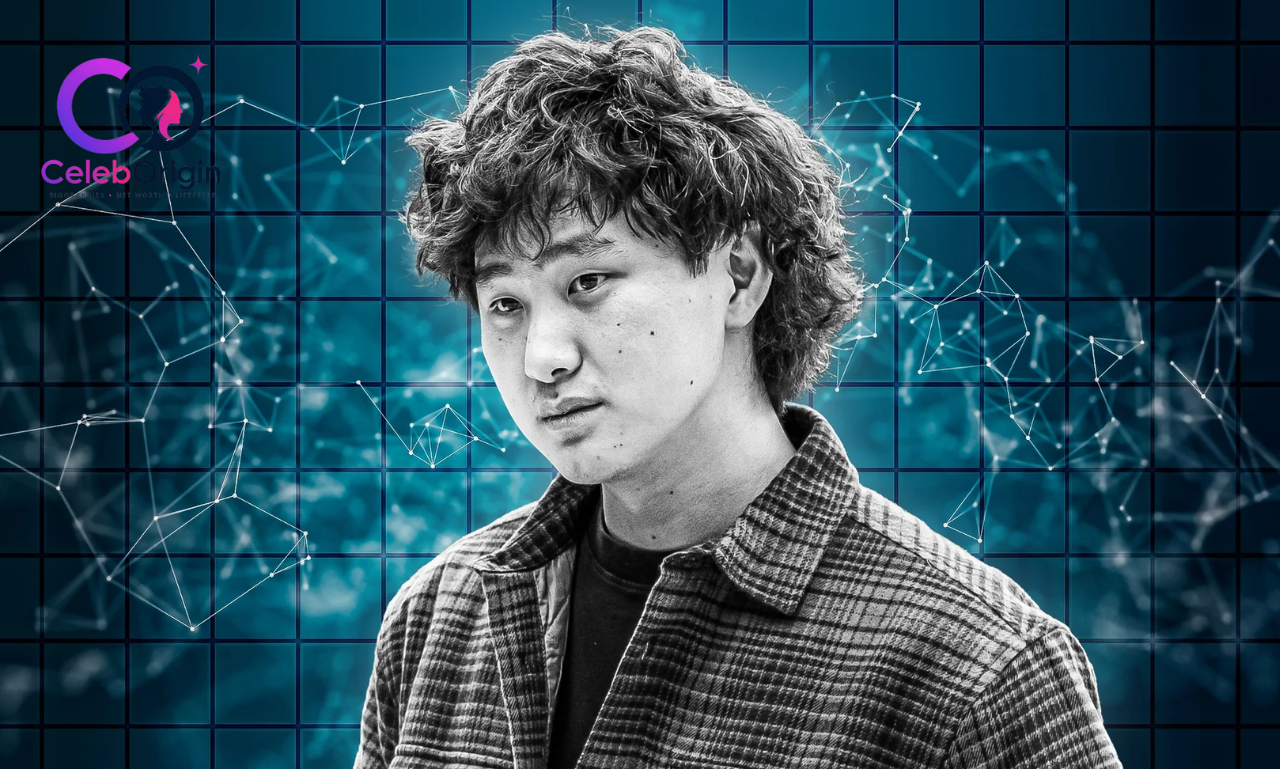
What is Alexandr Wang’s net worth in 2026?
Alexandr Wang’s estimated net worth is $3.2 billion as of October 2026, according to the latest reported real-time billionaire estimate. This is an estimate of his overall wealth, not a confirmed cash balance.
How did Alexandr Wang make his money?
Wang made most of his fortune through his entrepreneurial work and ownership in Scale AI, the company he co-founded in 2016. Scale AI grew by providing data preparation, annotation, and evaluation services for artificial intelligence systems.
Is Alexandr Wang a billionaire?
Yes. His estimated net worth is approximately $3.2 billion in October 2026, making him a billionaire according to published wealth estimates.
How old is Alexandr Wang?
Wang was born in January 1997, making him 29 years old in October 2026.
What company did Alexandr Wang found?
Wang co-founded Scale AI with Lucy Guo in 2016. The company provides data infrastructure and services used in the development and evaluation of artificial intelligence systems.
What is Scale AI worth?
The 2025 Meta transaction valued Scale AI at approximately $29 billion. This is a historical transaction valuation and should not automatically be treated as the company’s current market value in October 2026.
Did Meta pay Alexandr Wang $14.3 billion?
No public evidence establishes that Wang personally received the entire $14.3 billion. That figure refers to Meta’s reported investment in Scale AI for a 49% stake. The company’s transaction value and the founder’s personal proceeds are different financial measures.
What does Alexandr Wang do at Meta?
Wang serves as Meta’s chief AI officer and has been associated with its AI research and superintelligence initiatives. His work follows his tenure as Scale AI’s chief executive.
Did Alexandr Wang graduate from MIT?
No. Wang attended the Massachusetts Institute of Technology but left before completing his degree to pursue his startup opportunity.
Who are Alexandr Wang’s parents?
His parents have been described as physicists who worked at Los Alamos National Laboratory in New Mexico. Wang grew up in a community closely associated with scientific research.
Is Alexandr Wang married?
Public profiles have described him as single. The information reviewed for this article does not establish a publicly confirmed wife or spouse.
Where does Alexandr Wang live?
Public profiles list San Francisco, California, as his residence. This does not confirm ownership of a particular property or disclose a specific home address.
What is Alexandr Wang’s primary source of wealth?
His primary documented source of wealth is his entrepreneurial success with Scale AI. His reported billionaire status is closely linked to the value of his business interests rather than to a publicly disclosed salary alone.
Conclusion
Alexandr Wang’s financial journey reflects the growing economic importance of artificial intelligence. Born in Los Alamos, New Mexico, to parents who worked as physicists, he developed an early interest in mathematics and computing before leaving MIT to pursue entrepreneurship. In 2016, he co-founded Scale AI with Lucy Guo and helped build the company into an important provider of AI data infrastructure.
The company’s growth brought Wang considerable recognition and established the foundation of his billionaire fortune. Meta’s $14.3 billion investment in Scale AI in 2025 marked another major milestone, connecting his entrepreneurial background with Meta’s ambitions in advanced AI research.
As of October 2026, Alexandr Wang net worth is estimated at $3.2 billion. Although this figure provides a useful snapshot of his financial position, it remains an estimate influenced by private-company valuations and other assets whose complete details are not publicly available.

Mason Khan is the founder and writer behind CelebOrigin, a website dedicated to celebrity net worth, biographies, careers, lifestyles, and financial profiles. Through CelebOrigin, Mason researches publicly available information about celebrities, billionaires, and other notable personalities to create informative and easy-to-understand profiles.
His goal is to make information about well-known personalities more accessible by bringing together details about their careers, achievements, net worth, lifestyle, and professional journeys in one place.
Mason focuses on presenting information in a clear and reader-friendly way while using publicly available sources and regularly updating articles when new information becomes available.
— Mason KhanFounder & Writer, CelebOrigin